 I store my boat and sell the bulk of my catch to "North Pacific Seafoods". Their plant in the bay is called" Pederson Point" which is pictured here on a pretty rough day with 15 to 20 mph winds out of the west/southwest. Laying at the dock this particular day was a small tender and a barge that is being loaded with some of this year's catch in freezer vans. Fish activities have been going on at this location for about 100 years.
 There are more typical tenders pictured later. This one, with its sailing masts, is very unique.
 Pre-season preparation on the dock front.
 Another dockside image.
On the back side of one of the buildings, a family of ravens has nested for the past several years.
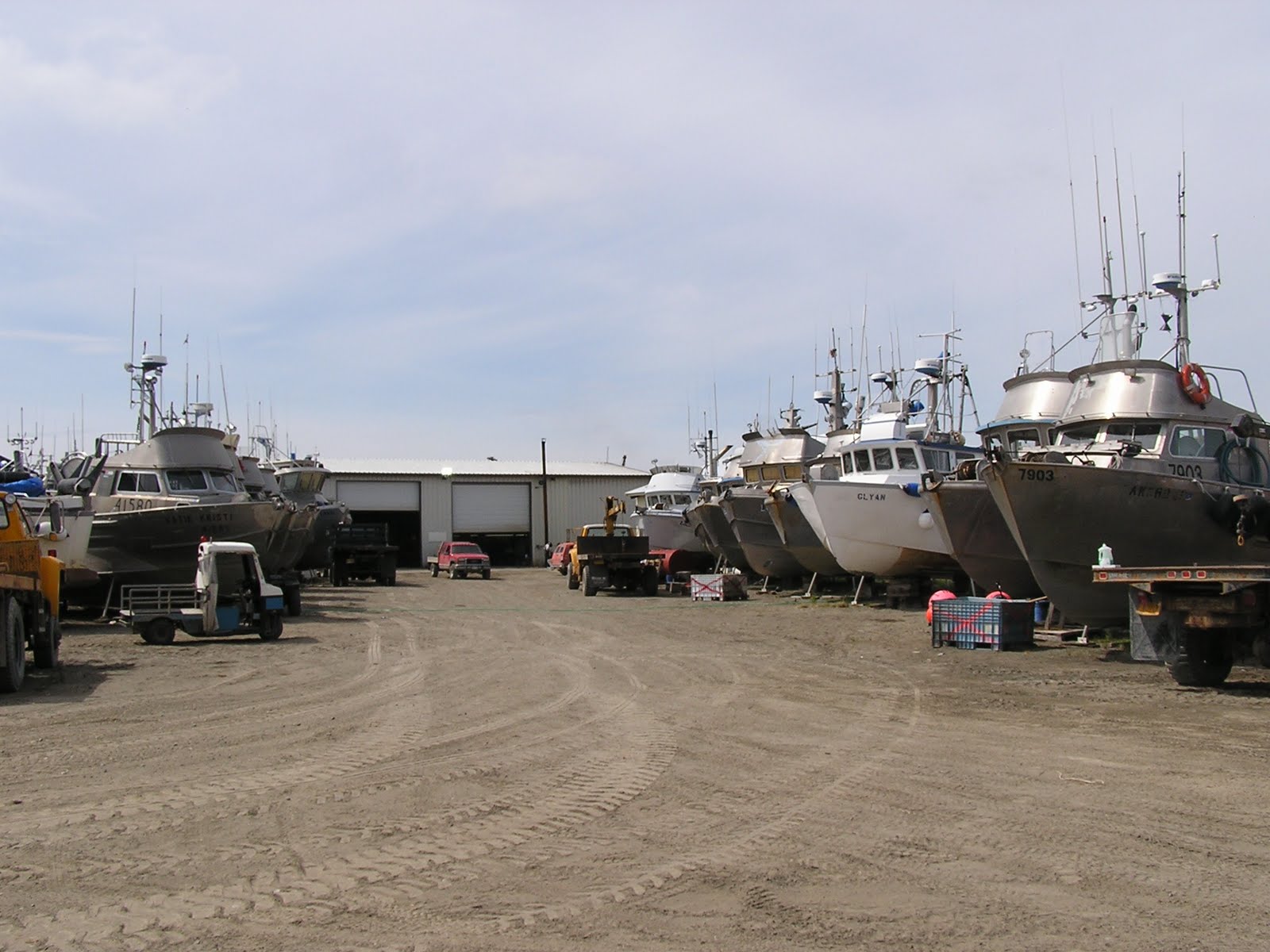
This is the boatyard on the land side of the buildings. The boats are being readied for the upcoming season.

My boat, the "Sarah Lou," was built in 1971. At the time, it represented the best that boat builders had produced for this fishery. Now it is functional but outdated. I stay with it because I own it outright with no desire to go into debt. I also like it because it is simple to maintain and operate. For me the adage" keep it simple stupid" applies. No boat in "The Bay " can be more than 32 ft. long. Width and height are a different matter. The boat on the left is mine. The one on the right is clearly an upgrade.
 The center of a lot of preparation is the top floor of one of the large warehouses, which is the net loft pictured here.
 My humble little boat lying on a set net.
Inside view looking forward where the four bunks are located.

This is the galley sink and counter top.

The galley stove for cooking, hot water, and cabin heat.
 Crewman Ryan Seward at the inside helm.
 Some of the fleet lying at anchor waiting for an opening.
Same as above.

An opening has been given, so we're setting the net off the drum. Crewman Ryan Green's hand is on the brake handle in case the drum gets spinning too fast and the net starts to stack up on the deck before going over the stern.
 The net is out, attached to the boat, and catching fish. Note the white water along the cork line. Fish are hitting the net swimming from right to left.
This net has been in the water for about 30 minutes and is stuffed full of fish. In some places the cork line is sinking. Heads and tails are visible above the surface. It doesn't happen that fast that often.
 This is a much lighter net of fish, but still a pretty good catch. We are now bringing the net up so we can take the fish out, then put it back for another try.
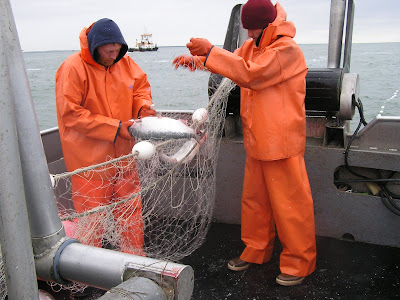
 The main physical labor is taking the fish out of the net.
 This involves untangling them one at a time. Speed and technique are everything.

 The next task is to get the fish into the waiting tenders.
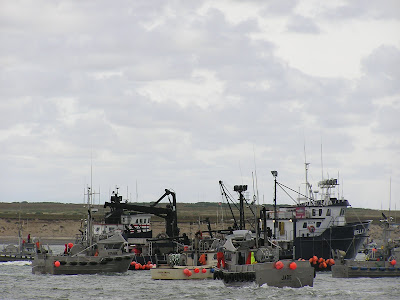
Boats lining up to deliver at the end of a fishing period.


 The next task is to get the fish into the waiting tenders.

Boats lining up to deliver at the end of a fishing period.

The boat alongside the tender is delivering fish. The boats strung out behind are waiting their turn.
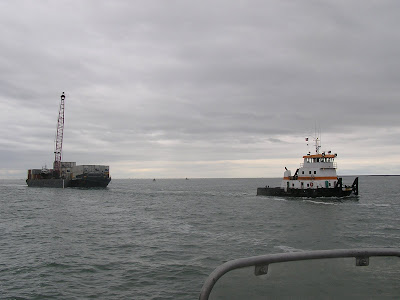
A lot of cargo, including processed fish, is moved by tug and barge.

This is a floating processor tied to the tramp steamer that will haul fish to distant ports.
 A small processor and some fishing boats tied to the dock at the Ocean Beauty plant in Naknek.
 My last Sunday there I attended church at the community church in Naknek.
 After church we ate lunch at the only restaurant in town.
 One of the five, or so, taverns in town was next door. We didn't go there.
 This is an end of the season good-by as our friends head back to their boats, and we head for ours in the opposite direction.
From here on there are some assorted shots that you may find interesting.
 Being passed by "state of the art."


One of the few kings we caught this summer, next to a sockeye.
 My faithful and able crew of 2010, Ryan Seward, left, and Ryan Green, right.

 Seals on a sand bar at low water.


Some setnetters getting their share.

A lot of cargo, including processed fish, is moved by tug and barge.

This is a floating processor tied to the tramp steamer that will haul fish to distant ports.
 A small processor and some fishing boats tied to the dock at the Ocean Beauty plant in Naknek.
 My last Sunday there I attended church at the community church in Naknek.
 After church we ate lunch at the only restaurant in town.
 One of the five, or so, taverns in town was next door. We didn't go there.
 This is an end of the season good-by as our friends head back to their boats, and we head for ours in the opposite direction.
From here on there are some assorted shots that you may find interesting.
 Being passed by "state of the art."

One of the few kings we caught this summer, next to a sockeye.
 My faithful and able crew of 2010, Ryan Seward, left, and Ryan Green, right.
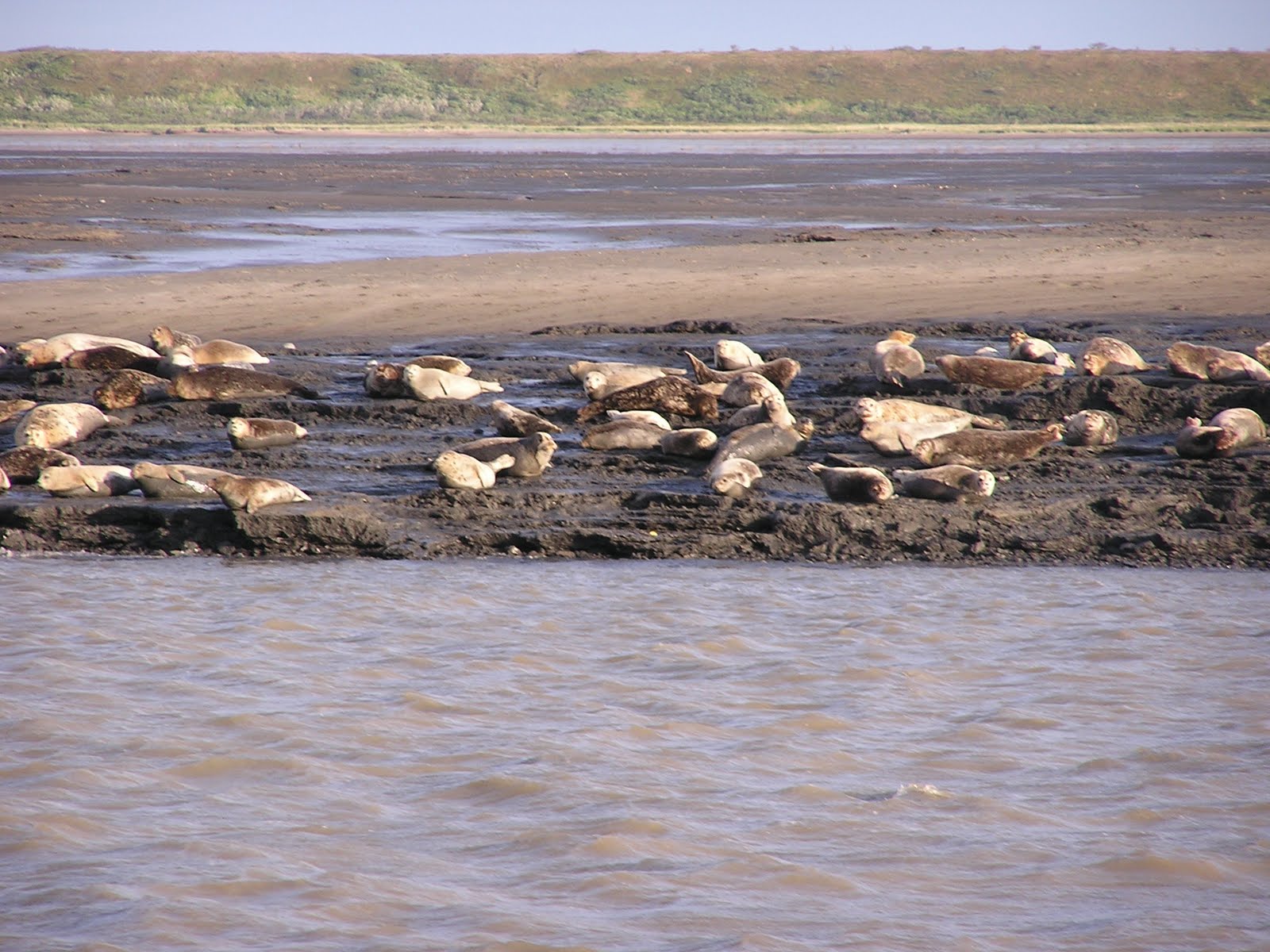 Seals on a sand bar at low water.

Some setnetters getting their share.
This year's production was down for us, but the price was up. So all in all it was a successful season.


